
MORTGAGE QUESTIONS
What is a reverse mortgage in Canada?
Short answer: A reverse mortgage in Canada lets homeowners aged 55 or older borrow against the value of their home without making regular payments. Interest builds up over time, and the loan is usually repaid when you sell, move out or pass away. You can usually borrow up to 55% of the home’s appraised value, depending on your age, the property and the lender. Rates are typically higher than regular mortgages.
In this guide: How a reverse mortgage works · How you receive the money · The costs to understand · How it affects your estate · Alternatives to consider · Questions to ask before you apply · Common mistakes to avoid · Talking it through with family · FAQ

A reverse mortgage in Canada is one way for older homeowners to turn some of their home equity into cash while staying in the home. It can help with retirement income, care costs or helping family, but it reduces the equity left in the home over time. Because it is a long-term decision that affects your estate, it deserves careful thought and conversations with family and advisors.
How a reverse mortgage works
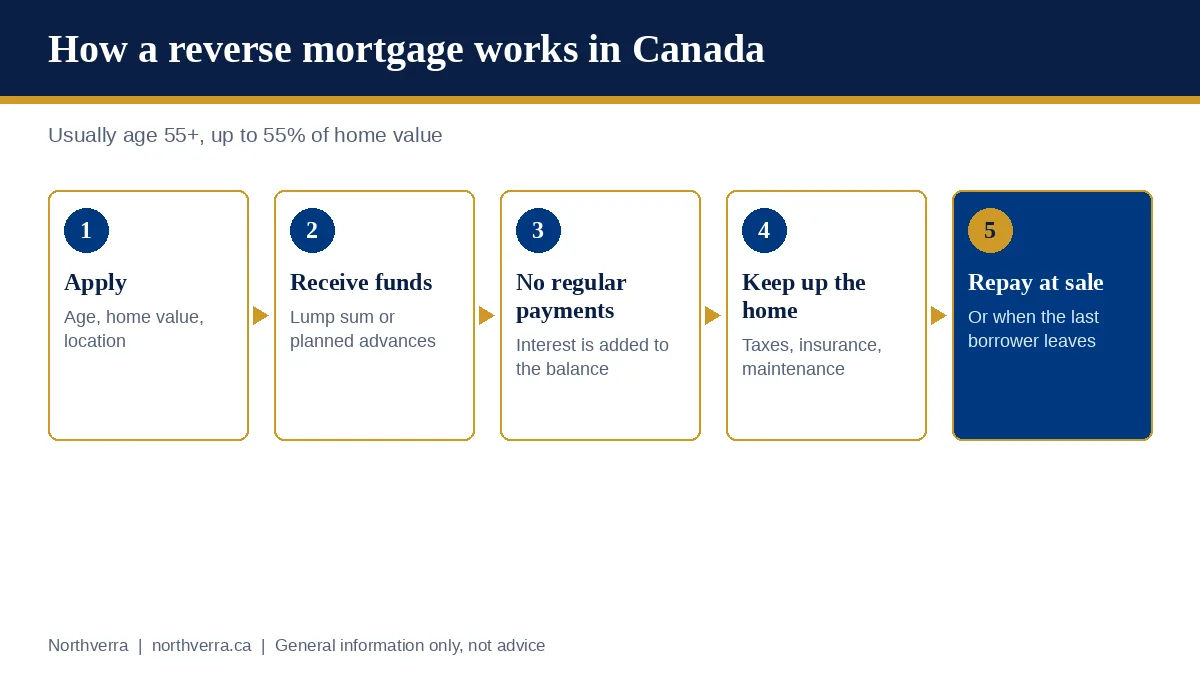
With a reverse mortgage, you borrow against your home and keep living in it. Instead of making payments, the interest is added to the balance, so the amount you owe grows over time. The loan, including the accumulated interest, is usually repaid when the last borrower sells, moves out permanently or passes away. You remain the owner and are responsible for property taxes, home insurance and keeping the home in good repair. If you do not meet those obligations, the lender may be able to call the loan.
According to the Financial Consumer Agency of Canada, you usually need to be at least 55 years old, and you can usually borrow up to 55% of the current value of your home. The actual amount depends on your age and the age of anyone else on title, the type, condition and location of the home and the lender. The home is typically required to be your principal residence.
How you receive the money
- A lump sum.
- Planned advances, such as monthly amounts.
- A combination, with an initial amount and later advances.
The money is a loan, not income, so it is generally not taxable and does not usually affect government benefits such as Old Age Security or the Guaranteed Income Supplement. Confirm how it would apply to you with a tax professional.
The costs to understand
- Interest rates are usually higher than for regular mortgages and HELOCs.
- Compounding interest means the balance can grow quickly over a long period.
- Upfront costs can include appraisal, legal and setup fees.
- Prepayment penalties may apply if you repay or sell within the first years.
Example (hypothetical): Helen, 72, owns a Calgary home worth about $800,000 with no mortgage. A lender approves a reverse mortgage of $200,000 based on her age and home. She takes $80,000 now for home repairs and to help with care costs, and leaves the rest available for later advances. She makes no payments, but interest builds on the $80,000 each year, so the amount owing will be noticeably higher in ten years. Her children know the plan and understand that the balance will be repaid from the sale of the home. These are hypothetical figures, not an estimate for any lender.
How it affects your estate
When the home is sold, the reverse mortgage balance is repaid first, and what remains goes to you or your estate. Reverse mortgages in Canada commonly include a guarantee that you will not owe more than the home’s fair market value at repayment, provided you meet the loan terms, but check the specific contract. Talking with your family early can avoid surprises later. Our page on how life insurance can help with estate planning covers other ways to plan what you leave behind.
Alternatives to consider
- Downsizing to a smaller home and freeing up equity without borrowing.
- A HELOC, which usually has a lower rate but requires regular payments and qualifying on income. See what a HELOC is.
- Reorganizing retirement income from RRIFs, pensions, TFSAs and government benefits. See retirement income sources in Canada.
- Selling and renting, which can free up all of your equity.
- Family support arrangements, documented carefully with legal advice.
Questions to ask before you apply
- How much could I borrow, and how quickly would the balance grow?
- What are all of the fees, and what penalties apply if I sell within a few years?
- What happens if I move into long-term care or my spouse stays in the home?
- What guarantees protect me and my estate?
- Have I discussed this with my family and an independent advisor or lawyer?
Common mistakes to avoid
- Borrowing more than needed early on, letting interest compound on a larger amount.
- Not comparing the total cost with alternatives such as a HELOC or downsizing.
- Leaving family members unaware of the plan.
- Forgetting the ongoing responsibility for taxes, insurance and maintenance.
Talking it through with family
A reverse mortgage affects more people than the borrower. Adult children may expect to inherit the home, or may be willing to help in other ways, such as a family loan or shared housing. A spouse who is not on title may need protection if the borrowing spouse dies or moves into care. Holding a family conversation before applying, and having a lawyer review the documents independently, can prevent misunderstandings and make sure the arrangement reflects everyone’s wishes. Some lenders require independent legal advice before closing for exactly this reason. It is also sensible to review your will and powers of attorney at the same time, so that decisions about the home can be made smoothly if you are unable to make them yourself.
Next step
If you are weighing a reverse mortgage against other ways to fund retirement, we can help you compare the options and the long-term effect on your equity and estate.
More questions people ask
Do I still own my home with a reverse mortgage?
Yes. You remain the owner and must keep paying property taxes and insurance and maintain the home.
Can I lose my home with a reverse mortgage?
You can stay as long as you meet the loan conditions. If you do not keep up with taxes, insurance or maintenance, the lender may be able to require repayment.
Is reverse mortgage money taxable?
Generally not, because it is a loan rather than income. Ask a tax professional how it applies to you.
What happens if my spouse is not on the loan?
This can affect whether they can stay in the home. Ask the lender and get legal advice before signing.
Related guides
Have a question? Start a conversation
Tell us a little about your situation. We will reply within one business day.
By submitting this form you agree that Northverra may contact you about your enquiry. Please do not include account numbers, health details or other sensitive information. See our Privacy Policy.
Important information. Mortgage approval, interest rates, terms and eligibility depend on the lender, your financial profile, the property and current market conditions, and are not guaranteed. Mortgage products and rates change. Nothing on this page is a commitment to lend or a quote of any rate. See our Disclosures.
Important information. The information on this page is general in nature, is provided for educational purposes only, and is not personalized financial, insurance, legal, tax or mortgage advice. Your circumstances are unique. Please speak with a properly licensed professional before making decisions. See our Disclosures.